DoD OIG Report Confirms UAP Whistleblower Faced Improper Reprisal; Clearance Revocation Overturned
The Department of Defense Inspector General has concluded that a DoD intelligence official's security clearance was revoked in retaliation for whistleblowing disclosures—a finding that triggered an emergency reversal by the Pentagon's appeals board within months. Internal communications from security officials reveal explicit concern about the "optics" of the revocation and references to unnamed senior figures "watching this one closely," newly released documents show. (FOIA Case DODOIG-2025-000932, released January 7, 2026)
What Happened
On August 29, 2022, a DoD intelligence officer's Top Secret/SCI (Sensitive Compartmented Information) clearance was revoked without warning. The formal final revocation order came on December 12, 2022.
Within weeks, the Personnel Security Appeals Board (PSAB)—the Pentagon's highest clearance appeals authority—overturned the revocation entirely on January 10, 2023. The clearance was reinstated to full TS/SCI access.
The timeline matters. The clearance revocation occurred approximately three months before the official became publicly known as a UAP whistleblower, yet the DoD OIG's 66-page investigation concluded the revocation was retaliatory—meaning the real reason for the clearance action differed materially from the stated justification.
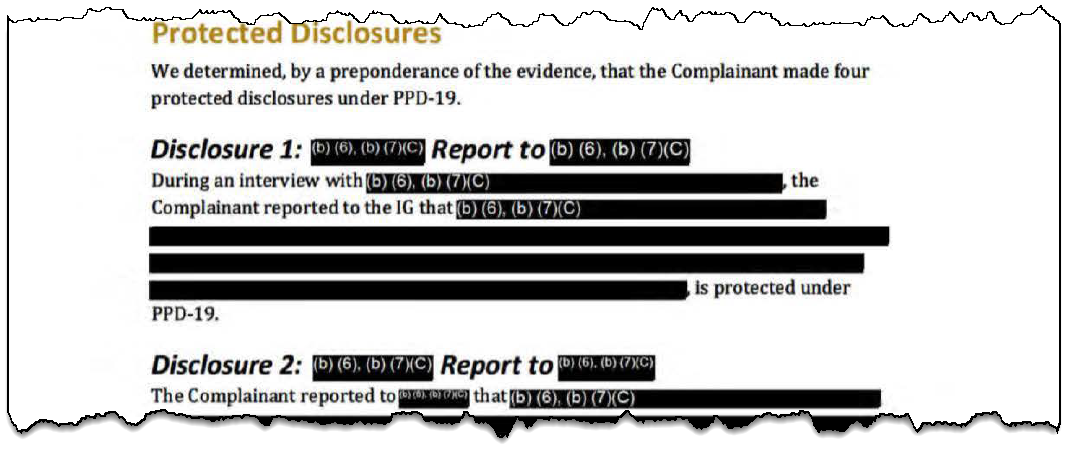
The OIG report, released January 7, 2026 following a FOIA request, documents what amounts to a failed effort to silence a source before his allegations could reach Congress. The fact that the attempt failed—reversed at the appellate level—does not erase the underlying violation. The OIG's determination of improper reprisal stands as the first independent government confirmation that a federal whistleblower suffered clearance retaliation for UAP disclosures.
The Internal Communications
The most damaging evidence in the report comes from internal messages between security adjudication staff—specifically the Central Adjudication Facility (CAF), the DoD office that processes and determines security clearances for intelligence and defense officials.
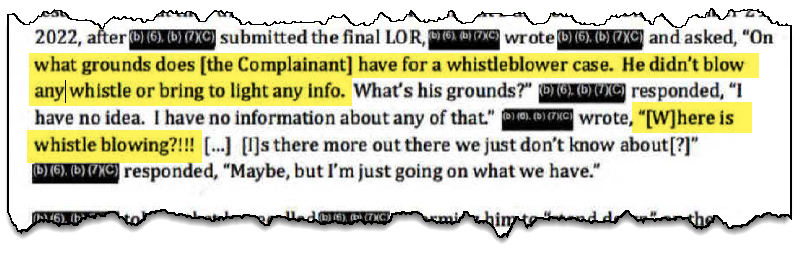
In one message, a CAF official wrote: "I am hoping to get this done today as I know [REDACTED] is watching this one closely."
In another: "I am very concerned about the optics of all of this."
A third communication stated: "There are 4-5 people that know what is actually going on."
These are the words of security bureaucrats deliberating on whether to revoke a clearance. The language reveals an investigation contaminated by political awareness and external pressure. Clearance decisions are supposed to be governed by counterintelligence and security risk factors—not "optics," not concern about who is "watching," and certainly not knowledge that only a handful of people understand the actual facts.
The CAF operates within the Defense Counterintelligence and Security Agency (DCSA), which is independent from policy makers and command structures. When CAF communications show awareness of external scrutiny and concern about appearance rather than substance, the integrity of the clearance process itself is compromised.
David Grusch: The Presumed Subject
The subject's name is redacted throughout the 66-page document. However, the timeline, career details, and public record make the identity unambiguous: David Charles Grusch.
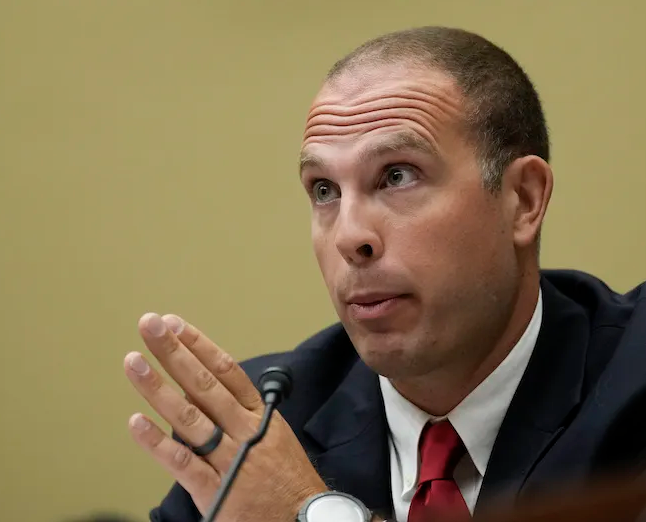
Grusch is a former officer of the National Geospatial-Intelligence Agency (NGA) and served as the National Reconnaissance Office (NRO) representative to the Pentagon's Unidentified Aerial Phenomena Task Force. In May 2022, he filed a formal complaint with the Intelligence Community Inspector General (ICIG), alleging that the U.S. government operates a multi-decade, compartmentalized program to recover, analyze, and reverse-engineer unidentified aerial phenomena.
Then-ICIG Thomas Monheim determined Grusch's complaint was "credible and urgent"—the highest credibility rating the inspector general can assign to a whistleblower allegation.
Grusch's clearance was revoked on August 29, 2022—approximately three months after his ICIG complaint.
On July 26, 2023, Grusch testified before the House Oversight Committee. He stated under oath that he had personal knowledge of a classified program involving recovered "non-human biologics" and that officials had told him the program existed. His testimony was widely covered and triggered congressional demands for unclassified briefings.
The DoD OIG's finding—that the August 2022 revocation constituted improper reprisal—means federal investigators concluded the clearance action was retaliation for his protected whistleblower disclosures.
The PSAB Reversal
The Personnel Security Appeals Board is the final appellate authority for security clearance denials within the DoD. A PSAB ruling overturns a clearance revocation only when the appeal board determines the original decision was not supported by the preponderance of evidence or was otherwise procedurally flawed.
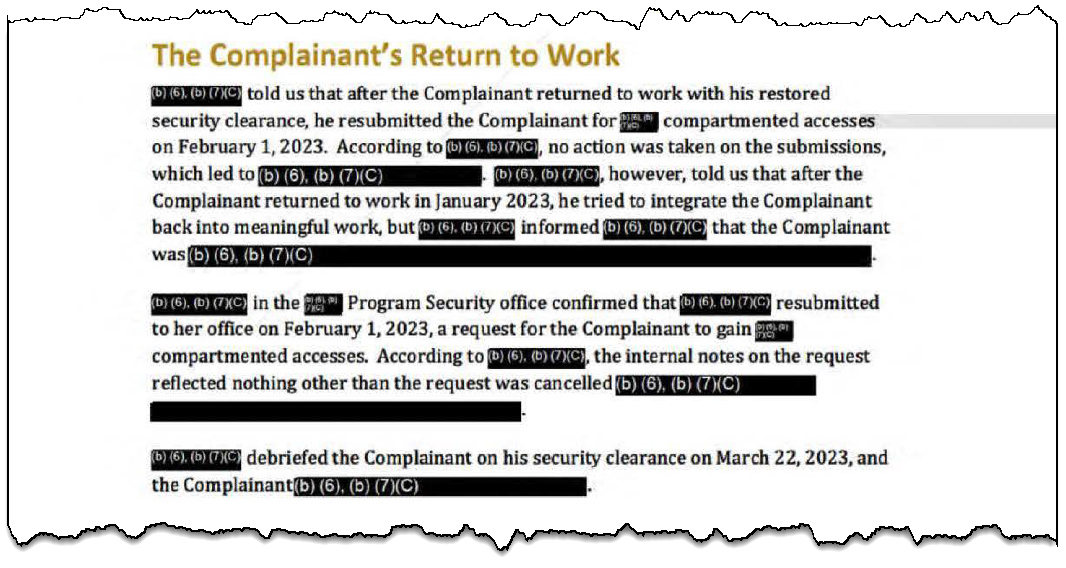
On January 10, 2023, PSAB issued its decision overturning the August 29, 2022 revocation. Grusch's TS/SCI clearance was reinstated.
The swiftness of the PSAB reversal—issued within approximately four weeks of the final revocation order—is unusual and suggests the board found the original decision lacking substantial merit. PSAB cases often take months to adjudicate. This one moved with apparent urgency.
The reinstatement of TS/SCI access is significant: it meant Grusch could continue accessing compartmented intelligence programs and materials. The DoD could not effectively silence him through the clearance process.
What remains unknown is whether PSAB explicitly found the original decision was retaliatory, or whether it simply determined the factual basis for revocation was insufficient. The PSAB decision itself is not included in the released OIG report.
What's Still Redacted
Of the 66-page report, the majority contains substantial redactions under multiple FOIA exemptions. The withheld material includes:
- Identities: Names of all individuals involved except the subject (Grusch, redacted)
- Agency identifications: Specific offices and components mentioned in the investigation
- Program details: Any reference to classified UAP programs or related intelligence operations
- Specific allegations: The precise complaints and evidence presented by the whistleblower
- Interview summaries: Detailed accounts of what witnesses told the OIG
- Investigative findings: The granular basis for the OIG's reprisal conclusion
- Classification levels and compartments: What programs or information the subject had access to
FOIA exemptions cited include (b)(1) for classified information, (b)(3) for information protected by other statutes, (b)(6) for personal privacy, and (b)(7) for law enforcement investigative materials.
The redactions are so extensive that readers cannot determine:
- What specific factual claims triggered the original clearance revocation
- What evidence the OIG found that contradicted those claims
- Whether any individuals were disciplined for the improper revocation
- What specific UAP program or allegation sits at the center of the reprisal
Open Questions
The released document raises more questions than it answers:
-
Who is "[REDACTED] watching this one closely"? The CAF message suggests a senior official was monitoring this case at a level unusual for routine clearance determinations. Who had that visibility and authority?
-
What programs or operations are referenced in the redacted sections? The classified information withheld likely details specific UAP-related intelligence activities.
-
Was anyone held accountable? The OIG concluded reprisal occurred, but the document does not state whether any official faced disciplinary action, termination, or referral for prosecution.
-
What was the stated reason for the original revocation? The document redacts the formal justification, making it impossible to assess how thin the pretext was.
-
Did the PSAB board explicitly find retaliatory intent, or merely insufficient evidence? The distinction matters legally and for understanding the board's reasoning.
-
How many other whistleblowers in the UAP intelligence community may have faced similar reprisal? This case reached the OIG and the appeals process. How many complaints were never filed, or were filed and ignored?
-
What is the current status of the original investigation into Grusch's allegations? Did the clearance reinstatement mean the ICIG's "credible and urgent" complaint was also validated, or has it remained in bureaucratic limbo?
-
Why was this report classified in the first place, and why did it take over two years to release even this heavily redacted version? FOIA cases involving potential government misconduct typically move faster.
Further Reading
Related coverage on this site:
- FOIA Release Shows DOD Tracking UAP References at Command Level
- Navy Blocks UAP Photo Release Despite Trump's Public Call for Disclosure
- Energy Department Releases Heavily Redacted UAP Documents
- Pentagon Curated UAP Media Access, FOIA Records Show
- Pentagon Documents Reveal Review of Mellon's "Off-World Technology" Claims
References
- The Black Vault — Full document archive and analysis: https://www.theblackvault.com/documentarchive/dod-inspector-general-releases-heavily-redacted-uap-whistleblower-reprisal-report/
- DoD OIG FOIA Case DODOIG-2025-000932 (PDF): https://documents2.theblackvault.com/documents/dod/DODOIG-2025-000932.pdf
- House Oversight Committee UAP Hearing (July 26, 2023): https://oversight.house.gov/hearing/unidentified-anomalous-phenomena-implications-on-national-security-public-safety-and-government-transparency/
- Intelligence Community Inspector General Transmittal Letter, "Whistleblower Reprisal" (May 2023, declassified summary): Congressional record